Self-storage can look like a relatively simple commercial real estate investment.
There are no kitchens to remodel, apartments to turn, or traditional office spaces to build out between tenants. But that simplicity can be misleading.
A self-storage property’s performance can depend heavily on location, competition, occupancy, rental rates, security, management, expansion potential, and the supply of storage units already available in the surrounding market.
If you’re considering purchasing a self-storage facility in Texarkana or elsewhere throughout Northeast Texas, Southwest Arkansas, Southeast Oklahoma, or Northwest Louisiana, here are some of the factors worth evaluating before you buy.
Start With the Existing Income
As with most income-producing commercial real estate, the asking price tells only part of the story.
Understanding the property’s actual financial performance is critical.
Review items such as:
- Current occupancy
- Unit mix
- Current rental rates
- Delinquencies
- Historical income
- Operating expenses
- Insurance
- Property taxes
- Management expenses
- Repairs and maintenance
Don’t rely solely on projected income. Whenever possible, evaluate how the facility has actually performed.
[INTERNAL LINK: Link “income-producing commercial real estate” to your Cap Rates article.]
Understand the Unit Mix
Not every storage unit generates the same demand.
A facility might contain a combination of:
- Small storage units
- Medium units
- Large units
- Climate-controlled units
- Non-climate-controlled units
- Boat or RV storage
- Outdoor parking
Look at which unit types stay occupied and which experience more vacancy.
A facility can show a strong overall occupancy rate while still having weaknesses within certain unit sizes or categories.
Study the Competition
Self-storage is particularly sensitive to local supply.
Before purchasing, investigate competing facilities within the property’s trade area.
Consider:
- Number of competing facilities
- Unit availability
- Rental rates
- Climate-controlled options
- Facility condition
- Security
- Access
- New facilities under construction or planned
Strong historical occupancy doesn’t necessarily guarantee the same performance if significant new supply enters the market.
Location Still Matters
Storage customers often value convenience.
Evaluate the property’s relationship to:
- Residential neighborhoods
- Apartments
- Major roads
- Employment centers
- Growing areas
- Commercial activity
Visibility can also be valuable, particularly when the property fronts a well-traveled road.
[INTERNAL LINK: Link “Location” or “location” above to your Choosing the Right Commercial Location article.]
Evaluate Access and Security
Customers need to feel comfortable leaving their belongings at the property.
Evaluate features such as:
- Gated access
- Keypad or controlled entry
- Security cameras
- Lighting
- Fencing
- On-site management
- Driveway configuration
- Interior drive aisles
Also consider whether larger moving trucks and trailers can comfortably enter, maneuver, and exit the facility.
Inspect the Physical Property
Self-storage buildings may appear relatively simple, but deferred maintenance can still become expensive.
A physical inspection should consider:
- Roofs
- Doors
- Foundations
- Drainage
- Electrical systems
- Lighting
- Pavement or gravel drives
- Fencing
- Gates
- Climate-control systems, if applicable
Water intrusion is particularly important to investigate because customers are trusting the facility to protect their belongings.
[INTERNAL LINK: Link “physical inspection” to your Commercial Property Due Diligence article.]
Review Occupancy Carefully
A high occupancy percentage sounds good, but it needs context.
For example, ask:
- How long has occupancy remained at this level?
- Are tenants paying current market rates?
- How many accounts are delinquent?
- Are promotional rates being used?
- What is the historical turnover?
- Are certain unit types consistently vacant?
Occupancy is only one part of the property’s financial story.
[INTERNAL LINK: Link “occupancy” to your Vacancy Rates article.]
Look for Expansion Potential
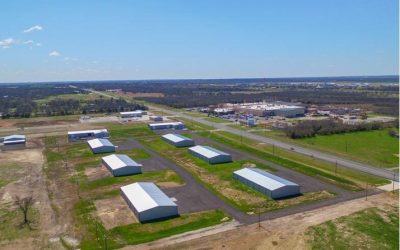
One of the most interesting aspects of some self-storage acquisitions is unused land.
If the property includes additional acreage, an investor may have the opportunity to add:
- Additional storage buildings
- Climate-controlled units
- Covered RV or boat storage
- Outdoor parking
But don’t assume vacant land can automatically be developed.
Zoning, utilities, drainage, access, site layout, and other development considerations should be investigated first.
[INTERNAL LINK: Link “development considerations” to your Commercial Land Development article.]
Technology and Management Matter
Self-storage has become increasingly technology-driven.
Depending on the property, management systems may include:
- Online reservations
- Online payments
- Automated gate access
- Remote security monitoring
- Digital leases
- Automated customer communication
When evaluating an acquisition, consider whether the existing management system will transfer and whether upgrades may be needed.
Understand the Expense Structure
Self-storage can have a different operating structure from office, retail, or multifamily property, but it certainly isn’t expense-free.
Potential expenses include:
- Property taxes
- Insurance
- Utilities
- Payroll
- Management
- Security
- Software
- Repairs
- Landscaping
- Gate maintenance
- Advertising
Investors should verify expenses rather than relying only on a seller’s projected operating numbers.
Consider the Property’s Future Competition
This deserves special attention with self-storage.
If demand appears strong and development barriers are low, competitors may see the same opportunity.
Researching vacant land, proposed developments, and nearby construction can help you better understand the property’s future competitive environment.
Common Mistakes Self-Storage Buyers Make
Focusing Only on Occupancy
A facility can be highly occupied while charging below-market rents or carrying delinquent accounts.
Ignoring New Competition
Today’s occupancy doesn’t necessarily represent tomorrow’s market.
Assuming the Property Is Passive
Even a relatively simple property requires management, maintenance, collections, security, and customer service.
Overvaluing Expansion Land
Additional acreage has potential only if expansion is physically, legally, and financially feasible.
Skipping Detailed Due Diligence
Financial statements, leases or rental agreements, physical condition, title, surveys, zoning, and other property information should be investigated before purchasing.
Self-Storage Investment in the Four-State Region
The Texarkana market serves communities on both sides of the Texas-Arkansas state line and sits at the center of a broader four-state region.
Population movement, housing development, apartment construction, business activity, and recreational uses can all influence demand for storage.
But self-storage is ultimately a very local business.
Investors should evaluate the specific trade area surrounding the facility rather than relying solely on broader regional trends.
Final Thoughts
A self-storage facility may appear straightforward, but a good investment decision requires understanding much more than the number of units and the asking price.
Occupancy, rental rates, competition, unit mix, expenses, physical condition, management, security, and future supply all matter.
And if expansion is part of the investment thesis, the feasibility and cost of that expansion should be investigated before assigning significant value to it.
Related Articles
- Understanding Cap Rates in Commercial Real Estate
- Understanding Vacancy Rates in Commercial Real Estate
- What Investors Should Know About Commercial Property Due Diligence Before Closing
- What Business Owners Should Know Before Purchasing Commercial Land for Future Development
- How Is Commercial Property Value Determined? A Guide for Property Owners
Considering buying or selling a self-storage facility in Texarkana or elsewhere throughout Northeast Texas, Southwest Arkansas, Southeast Oklahoma, or Northwest Louisiana?
Contact Realty Fanatics Commercial.
We’ll help you evaluate the property, market, financial information, location, and potential so you can make an informed commercial real estate decision.